High River Film

About High River Film
High River Film is an emerging independent film collective based in High River, Alberta, created by first-time filmmakers exploring documentary and experimental cinema through stories rooted in land, memory, and lived experience.
Our debut feature documentary, Echoes of Our Land: Voices From the Buffalo Stone, was created collaboratively by a team of emerging artists and storytellers connected to southern Alberta. The film explores the legacy of Treaty 7 and the layered histories, voices, and experiences that have shaped the town of High River and the surrounding region. The project has been submitted to a number of international festivals as part of its film journey.
The film marked a number of important firsts for the collective.
A. G. Burdick directed her first feature-length documentary after years of working in community storytelling and visual media. Jared Tailfeathers joined the project as co-writer, co-producer, and narrator, bringing a poetic and reflective voice to the film’s exploration of history and place. Cinematographer Sumedh Gupte shot his debut feature film, helping shape the project’s visual language through atmospheric prairie imagery and observational filmmaking. Cheryl Kendall led the sound recording process, capturing the voices, environments, and oral histories that ground the film emotionally. The film also introduced emerging local voices, including Liz Vigueras, a leading community arts advocate and Jason Blackkettle Sunwalk, a talented emerging actor from High River.
The documentary also introduced audiences to Grant Many Heads, a sixth-generation descendant of Chief Crowfoot and a senior cultural interpreter at Blackfoot Crossing Historical Park. Through oral storytelling and lived experience, Grant’s contribution became central to the spirit and direction of the film.
High River Film was created from the belief that powerful cinema can emerge from small towns, overlooked voices, and first-time filmmakers. Our work combines documentary, oral history, landscape cinematography, experimental film language, and collaborative storytelling to create films that are deeply connected to place.
As we continue developing new projects — including Where the Mountains Speak, Hoofbeats Across the Prairie, and the experimental short Airspace — we hope to build an evolving body of prairie cinema that connects local stories to wider conversations about identity, history, memory, and belonging.
High River Film is not only about making films. It is about creating space for emerging voices, artistic risk-taking, and authentic storytelling from southern Alberta and beyond.
A.G.Burdick
Women in Film BBC Radio Oxford 2014 Article
Visual Stories: A High RIver Film Picture Gallery

Jared Tailfeathers at the Museum of the Highwood
Jared Tailfeathers and Liz Vigueras at the Museum of the Highwood.
Jared Tailfeathers and Liz Vigueras at The Old Women's Buffalo Jump.

1908 - High River - Courtesy of The Museum of the Highwood.
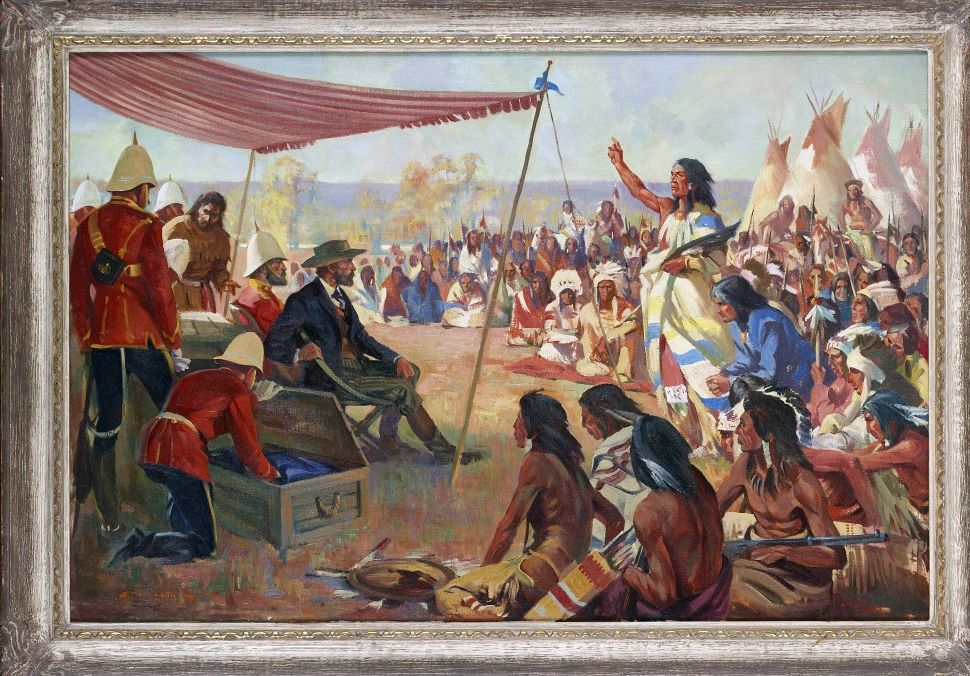
" The Blackfoot Treaty (Treaty 7), 1877, Crowfoot speaking.", 1877, (CU1106997) by Stapleton, A. Bruce. Courtesy of Glenbow Library and Archives, Glenbow Archives Collection, Libraries and Cultural Resources Digital Collections, University of Calgary.
Grant Many Heads at Blackfoot Crossing Historical Park.